Filter by topic and date
IETF 105 Highlights
- Alissa Cooper IETF Chair
6 Aug 2019
The 105th gathering of the IETF community took place July 20-26, 2019. It featured several popular special sessions in addition to productive working group meetings.
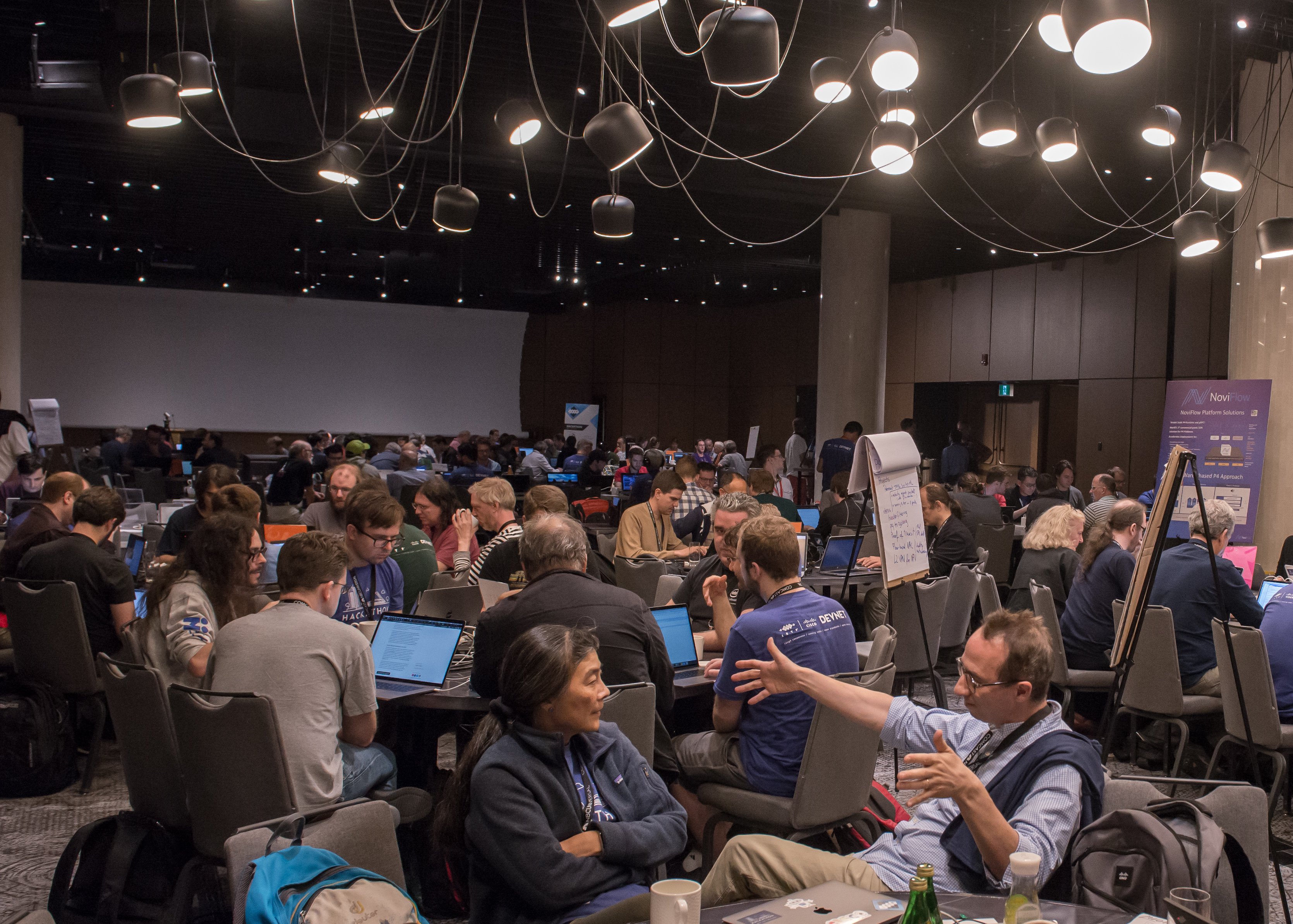
The IETF meeting week always involves a packed agenda, with about 120 working group sessions plus the IETF Hackathon, Code Sprint, tutorials, ‘unofficial’ side meetings, opportunities to socialize, and more. IETF 105 featured a number of additional special events, two lively plenary sessions, and a collection of successful Birds of a Feather (BoF) sessions.

The meeting week kicked off with the co-located ACM/IRTF Applied Networking Research Workshop (ANRW), which brought researchers, vendors, network operators, and the Internet standards community together to discuss emerging results in applied networking research. Over 200 people attended the day’s talks on topics ranging from DNS to QUIC to network time to middleboxes and more. I was particularly pleased to hear the research results presented at the Monday workshop continue to be cited in multiple different working group sessions throughout the week as IETF participants leveraged the findings in their engineering discussions.
On Tuesday we hosted a Technology Deep Dive session: How Network Interface Cards (NICs) Work Today. Our expert presenters from the Linux kernel community explained everything from the basics of NIC operation to modern NIC feature evolution. Huge thanks to Jamal Hadi Salim for supporting and promoting this session outside the IETF audience in Montréal. The video stream was our most popular one of the week.
On Wednesday we experimented with a new plenary format, allocating a dedicated slot to the technical plenary followed by a dedicated slot for the administrative plenary. Technical plenary speakers Arvind Narayanan and Steve Bellovin presented two current takes about the state of privacy on the Internet and its intersection with user attitudes, policy concerns, measurement techniques, and standards. They described a challenging reality but not without hints of optimism concerning fingerprinting mitigations and data tagging.
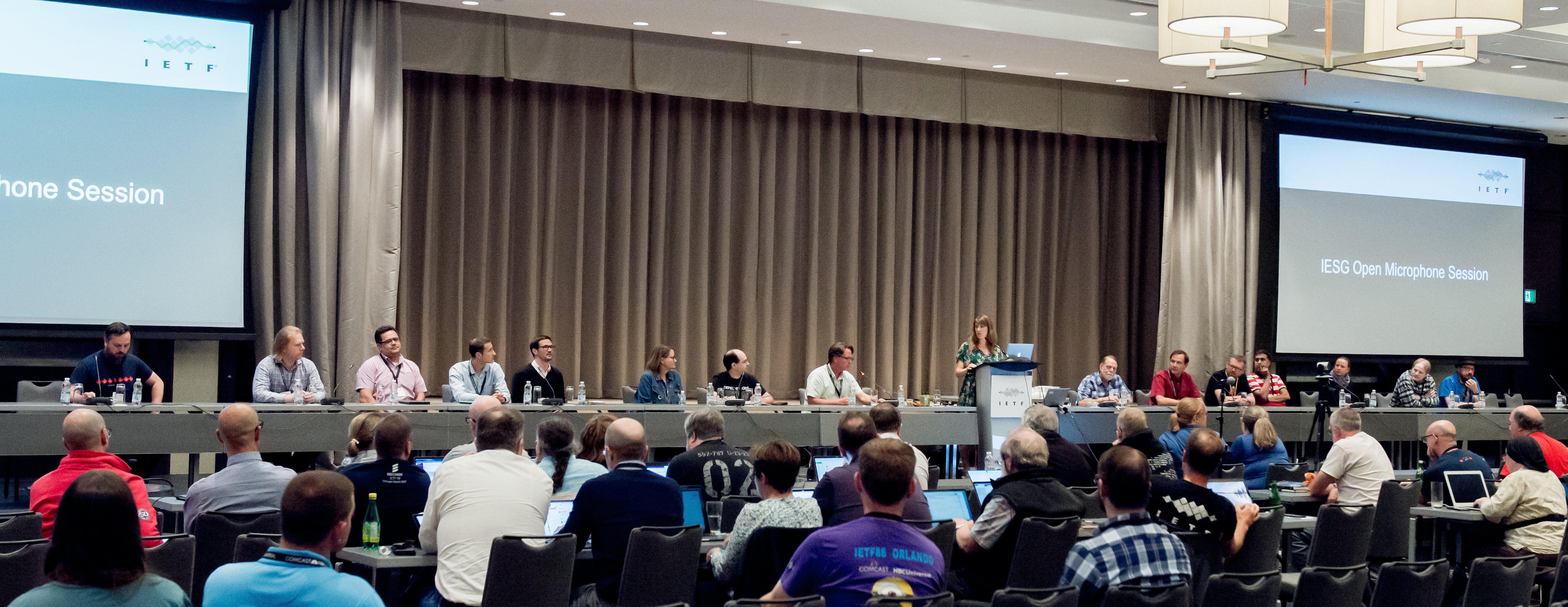
The Internet Architecture Board (IAB) open microphone segment of the administrative plenary featured a lengthy discussion about the RFC Editor model in light of the departure of our current RFC Series Editor, Heather Flanagan, effective at the end of this year. The input received at the plenary was a welcome part of the ongoing discussion that Heather and the IAB have invited the community to continue on rfc-interest@rfc-editor.org.
I also spent some time during my plenary report talking about our guidelines for professional conduct in the IETF given recent discussions on that topic on ietf@ietf.org. I and the Internet Engineering Steering Group (IESG) appreciate the input we received about this at the microphone and will feed it into our next steps on this issue.
Finally, we had four technical BoF sessions, each of which achieved useful results in its own way:
Local Optimizations on Path Segments (LOOPS): The LOOPS BoF featured lots of insightful questions and comments from participants thinking about in-network optimizations. Many of the questions related to the scope of the proposed work and its relationship to other existing standardization and research activities. Discussion will continue on the mailing list.
Media Operations (MOPS): After gathering for a series of unofficial side meetings, the MOPS proponents and chairs hosted a constructive discussion focused on operational issues related to media (primarily video) delivery at Internet scale. Further refinements to the charter were discussed but once those emerge it seems likely that MOPS will be proposed for chartering as a working group.
Lightweight Authenticated Key Exchange (LAKE): The LAKE BoF came after extensive prior discussions within the IETF’s security area concerning the desire for an authenticated key exchange protocol that can provide forward secrecy in environments with constrained devices and networks (i.e., Internet of Things environments). The BoF discussion focused on the generality and specificity of different potential sets of requirements and how they may or may not be met by two proposed solutions: Ephemeral Diffie-Hellman Over COSE (EDHOC) and Compact Transport Layer Security (cTLS). Both proposals have substantial interest, and with potentially non-overlapping areas of applicability, we look forward to seeing further refinement of the specific requirements and technologies.
Applications Doing DNS (ADD): The ADD BoF sought to identify areas where the IETF community might be interested in working on protocol standardization or best practices related to applications doing their own DNS resolution. The wide-ranging discussion touched on a few such nascent areas, including DNS-over-HTTPS (DoH) server discovery, means of advertising DNS resolver properties, and operational best practices. The most conclusive outcome, though, was a collective realization that it may be time to reorganize DNS-related work in the IETF to ensure that broad-based participation, cross-area review, and sufficient agenda and chair time can be dedicated to what is obviously a pressing set of topics for the industry. Discussions continue on the mailing list.
Thanks to everyone who joined us in person and online to make IETF 105 a success. See you on the mailing lists!